Skip to product information
1 of 3

Calendula Oopsy Daisy

Calendula Oopsy Daisy

Regular price £2.30 GBP
Regular price Sale price £2.30 GBP
Sale Sold out
Taxes included.

Calendula officinalis 'Oopsy Daisy' Dwarf Pot Marigold 'Oopsy Daisy'

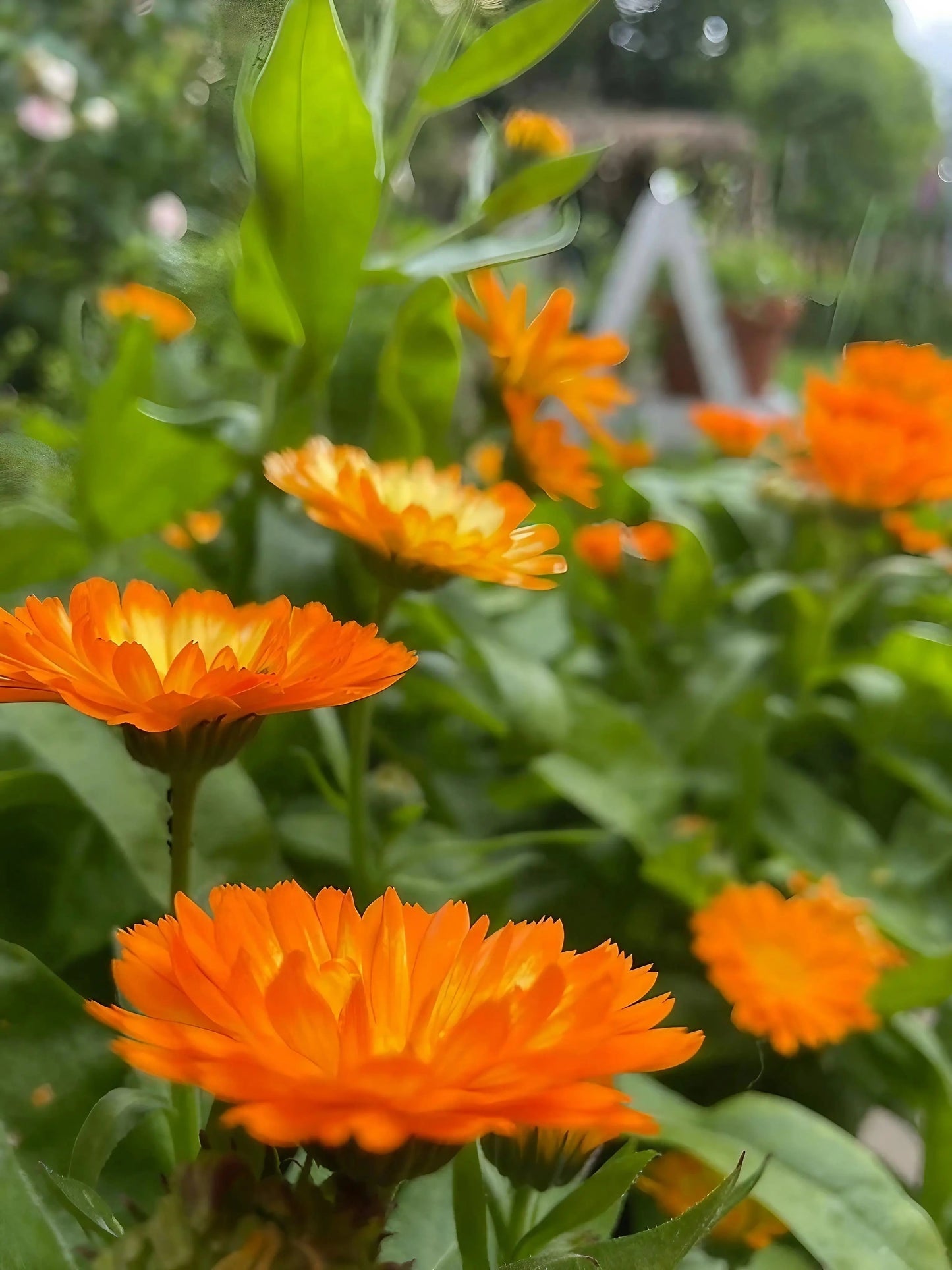
A creamy-white pot marigold with each petal tipped in a splash of vibrant tangerine — as if a child had dipped the flowers in paint — on naturally compact, bushy 25–30cm plants that are absolutely perfect for window boxes, patio pots and the edges of paths.

'Oopsy Daisy' is named for its delightfully unpredictable bicolour pattern — every flower is slightly different, with the tangerine "paint splash" appearing on the petal tips of some, the bases of others, and the centres of yet others. The result is a charming, playful, never-quite-uniform display that gives any container or path edge a cheerful "oops-I-spilled-the-paint" character. Botanically the same species as the tall calendulas, but bred for a dwarf, naturally compact habit — ideal where you want neat mounds of colour that won't flop. Hardy annual with 100% edible petals (the bicolour pattern is genuinely beautiful scattered over salads or summer cakes). RHS Plants for Pollinators recognised. Drought-tolerant once established.

A note on growing

Calendula seeds need darkness to germinate. Sow at 1cm depth — cover well with soil or compost. Direct sowing works well from March to May, or in September for autumn-sown plants that flower earlier the following spring. For containers, sow two or three seeds per 30cm pot, then thin to the strongest plants. Germination is fast — 7–14 days at 10–20°C. Full sun is best, though 'Oopsy Daisy' tolerates partial shade. Deadhead religiously to extend the flowering season — without deadheading, even the most generous calendula stops blooming after a few weeks.

Where it shines

In window boxes, patio containers and hanging baskets where the dwarf habit and bicolour pattern give a properly cheerful display all summer. As edging along cottage paths where the low mounds soften hard lines. In the kitchen garden as a companion plant — calendula's classic role of attracting hoverflies and beneficial predators to control aphids works just as well in the dwarf form. The bicolour edible petals are particularly photogenic on cakes and in salads.

Plant alongside

For containers, pair with the deep purple honey-scented carpet of Alyssum 'Royal Carpet' for proper colour contrast, or with Nasturtium 'Tom Thumb' for an entirely edible window box. In the border, the cream-and-orange tones complement the soft buttermilk of Calendula 'Pacific Beauty Cream' for a pale, harmonious scheme.

View full details