Skip to product information
1 of 1

Chamomile German

Chamomile German

Regular price £2.00 GBP
Regular price Sale price £2.00 GBP
Sale Sold out
Taxes included.

Matricaria chamomilla 'German Chamomile' The earth-apple herb — sweet apple-scented daisies for the world's most-drunk herbal tea

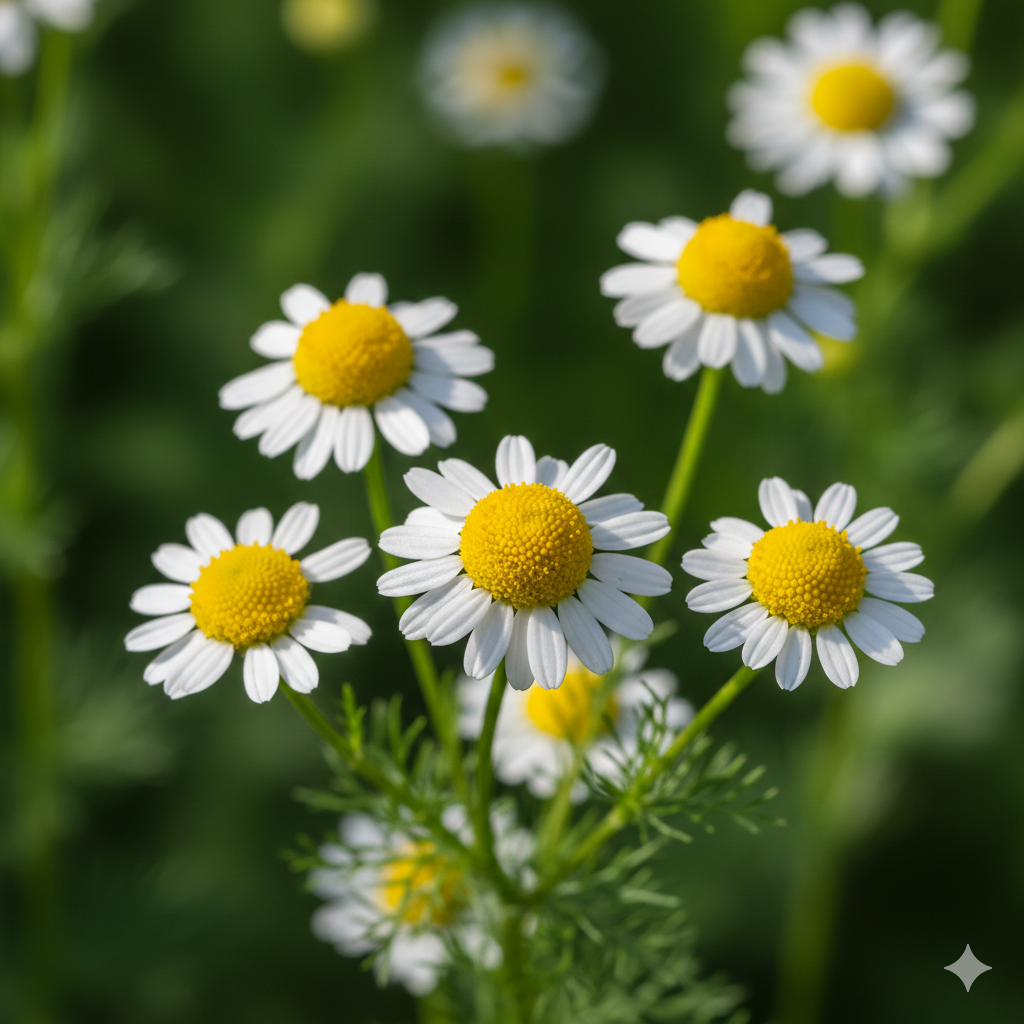
If you grow only one herb for the tea cupboard, this is probably the one. German Chamomile is the hardy annual chamomile of cottage-garden tradition — Matricaria chamomilla, sometimes called wild or scented chamomile — and a single small patch will produce more dried flowers in a summer than most households can drink in a year. The flowers themselves are small, white-petalled daisies with high, golden-domed centres, carried on slim, ferny-leaved stems; the whole plant gives off the sweet, soft, apple-like fragrance that gave chamomile its Greek name (chamai-melon — "earth-apple"). It's one of the loveliest scents in any herb garden.

This is the variety used for chamomile tea worldwide — produced commercially in vast quantities across Europe and beyond, drunk in every continent, and steeped into more cups than any other herbal infusion on earth. The dried flower-heads make a fragrant, gently apple-sweet, soothing tea: traditionally taken at the end of the day, for its long association with restfulness and quiet evenings. There's a particular pleasure in sitting down to a cup of chamomile from your own garden, grown from a £2 packet of seeds, that no shop-bought teabag can quite match.

It's also one of the most useful companion plants in any kitchen garden. Sometimes called "the plants' physician," chamomile is said to improve the health and vigour of nearby herbs and vegetables, particularly cabbages, onions, cucumbers and other brassicas. Whatever the precise mechanism, gardeners have noticed the effect for centuries; the flowers also draw in hoverflies, lacewings, ladybirds and other beneficial insects that quietly help with aphid control. Add to that the official RHS Plants for Pollinators endorsement, and you've a herb that earns its space several times over.

The plant itself is easy and undemanding: a compact, branching annual of 30 to 50cm, with feathery, finely divided leaves and a long flowering season from early summer well into autumn. It's hardy, content in most soils, and a generous self-seeder once established — let a few flowers run to seed and you'll have a chamomile patch for years to come.

A note on growing

German Chamomile is one of the easiest herbs you can grow, and rewards a gentle hand. The seeds are tiny and need light to germinate — so sow on the surface and don't cover them, or barely press them into the compost.

Sow indoors from March to April in modules or shallow trays, kept moist on a windowsill or in a cold frame at around 15–20°C. Germination usually takes one to two weeks. Once the seedlings have two or three true leaves, prick out gently — the roots are fine — into individual modules or 7cm pots, and harden off for a week or so before planting out after the last frost, spacing them about 15cm apart.

Or, if you'd rather, sow direct from April to June, scattering the seeds onto a well-prepared seedbed in a sunny or lightly shaded spot, pressing them lightly into the surface, and watering gently. Thin to 15cm as the seedlings establish.

Chamomile is genuinely undemanding once growing. It prefers a sunny position and free-draining soil, but tolerates partial shade and most ordinary garden conditions. Water in dry spells, especially when the plants are young; mature plants are drought-tolerant. Don't feed: like many herbs, chamomile produces its best scent and flavour on the lean side, and rich soils give you leafy plants with weaker fragrance.

Allow the plants to self-seed for a continuing supply — or save a few seed-heads in late summer to sow yourself the following year. Once you've had a chamomile patch for a season or two, it usually keeps itself going.

Harvesting and drying

The flower-heads are what you're after — pick them when they're fully open, the golden cone risen and the white petals just beginning to angle downwards. Mid-morning is the traditional time, once the dew has dried but before the sun gets fully hot, when the essential oils are at their strongest.

Snap or snip the heads off cleanly (a small pair of flower snips is ideal for the small stems), leaving most of the stalks behind so the plant keeps producing. Spread the picked flowers in a single layer on a tray or muslin in a warm, dry, airy place out of direct sun — an airing cupboard, a sunny windowsill, or a low oven at no more than 35°C. They'll dry in a few days; once crisp to the touch, store in an airtight jar away from light.

To make tea, steep a teaspoon of dried flowers in just-boiled water for five to ten minutes, strain, and sweeten with honey if you like. One good summer of growing will give you enough dried chamomile for the whole of next winter.

Where it shines

German Chamomile suits a cottage herb border, a vegetable garden corner, an edge of a kitchen-garden bed, or a low-key wildlife patch — anywhere it can self-seed and the flowers can be reached for picking. It's particularly lovely near a path or a sitting spot, where you'll brush past the foliage and release that warm apple fragrance into the summer air.

Plant it amongst your brassicas, onions or cucumbers as a companion; tuck it into a herb garden alongside lavender and feverfew; or simply let a patch develop somewhere quiet, for tea and for the bees. It's a herb that asks for very little and gives back generously — and that's a quality worth growing.

At a glance

  • Type: Hardy annual herb (Matricaria chamomilla)
  • Height: 30–50cm; Spread: 25cm; Spacing: 15cm
  • Sow: Indoors March to April; direct April to June
  • Flowering: June to September
  • Position: Full sun or light shade; free-draining soil
  • Care: Easy and undemanding; don't feed; allow to self-seed for years of plants
  • RHS Plants for Pollinators — loved by bees, hoverflies and beneficial insects
  • Use: The world's most-drunk herbal tea; companion plant for brassicas, onions, cucumbers
  • Approx. 750 seeds per packet

Plant alongside

Chamomile is a natural fit in a herb or kitchen garden. Plant alongside French Marigold 'Spanish Brocade' for pollinator-and-pest support, or near Calendula 'Neon' for a colourful, beneficial-insect-friendly border. Lavender, feverfew, dill and borage all share its preferences for sun and light soil, and make handsome herb-garden partners.

View full details