Skip to product information
1 of 6

Chicory Wild

Chicory Wild

Regular price £2.20 GBP
Regular price Sale price £2.20 GBP
Sale Sold out
Taxes included.

Cichorium intybus Wild Chicory / Common Chicory / Blue Sailors

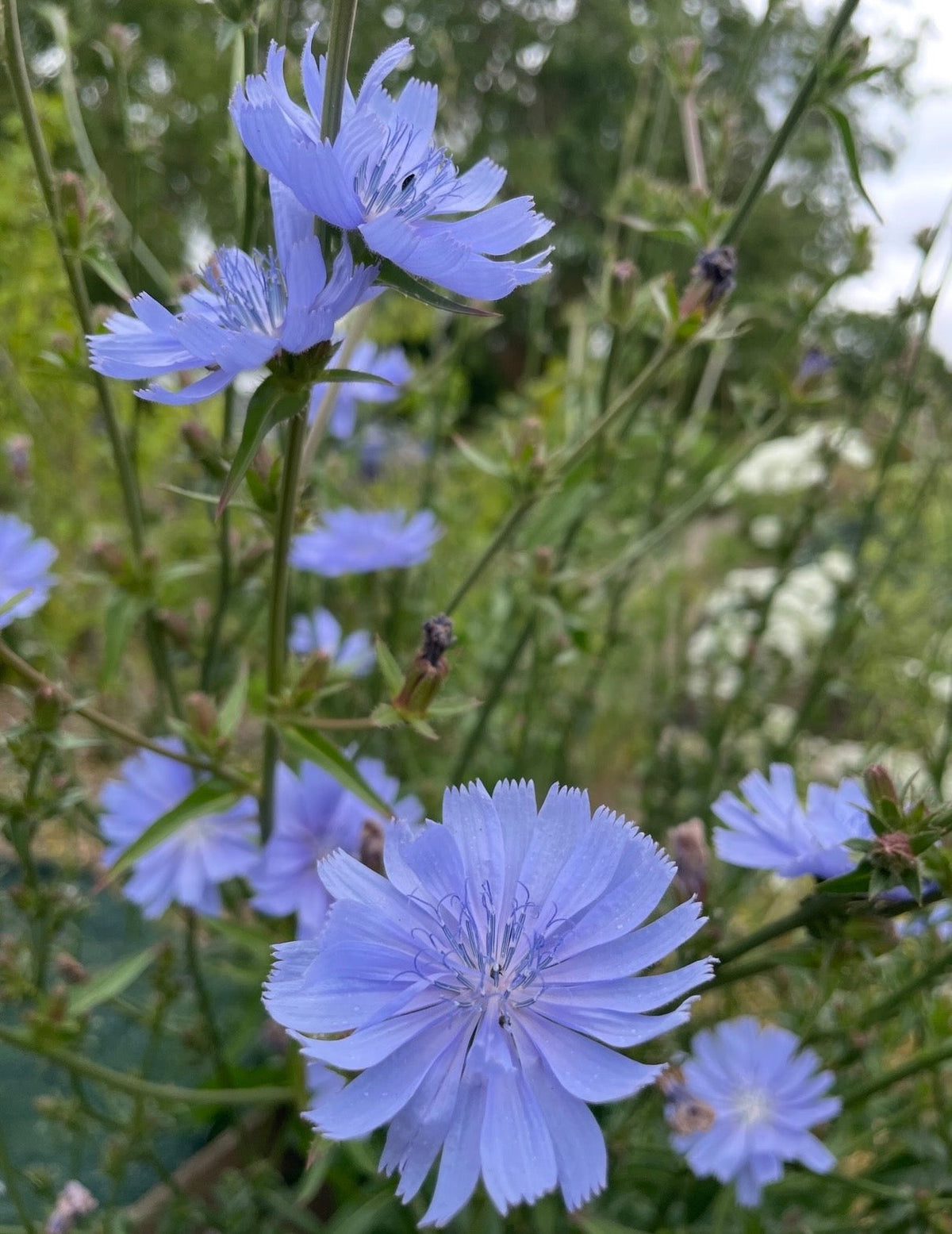
Tall, wiry, zigzagging stems carrying star-shaped flowers in a shocking shade of azure blue — a native British perennial that thrives in poor, dry ground where nothing else will grow, and one of the very best plants you can sow for an authentic, wildlife-rich roadside-meadow look.

If you have ever driven past a British roadside verge in July and spotted those impossibly blue, almost-electric stars on tall wiry stems, you have already met Wild Chicory. It is one of the most striking native wildflowers in our flora, and one of the toughest perennials you can grow from seed. The plant develops a deep, parsnip-like taproot that anchors it through drought and gives it a hardy perennial nature (H7, surviving below -20°C). In its first year it forms a low rosette of dandelion-like leaves; from year two onwards, it sends up its characteristic zigzagging flowering stems to a metre or more, carrying dozens of those vivid blue stars from June through to September. RHS Plants for Pollinators recognised, with the flat, open flowers acting as accessible landing pads for bees and hoverflies. Drought-tolerant once established. Edible roots and leaves with a long history of human use.

A note on growing

Wild Chicory has a deep taproot and genuinely resents being moved — direct sowing is the most reliable method. Sow direct outdoors from March to May, or in September for established rosettes that will flower the following summer. Sow at 1cm depth in poor, well-drained soil. Full sun is essential. Chicory is a specialist of alkaline and chalky conditions but will tolerate almost any ground except waterlogged bog. Once established, it requires no additional watering even in peak summer heat — the deep taproot reaches moisture far below the surface. Self-seeds reliably; either pull excess seedlings or leave them to naturalise into a wild colony.

A note on the "floral clock": chicory flowers possess a distinct circadian rhythm, opening wide in the morning and closing by early afternoon or in dull weather. This biological adaptation preserves nectar and protects the flower's reproductive organs. Do not be alarmed by closed flowers in the afternoon — this is normal and the plant is doing exactly what it evolved to do.

Where it shines

In wildflower meadows, naturalistic plantings, and gravel gardens where its drought-tolerance and electric blue colour earn their place. As a structural perennial in cottage borders for an authentic countryside feel. In rewilding and wildlife-garden projects where the native status and pollinator value matter. The young leaves can be eaten raw in salads with a bitter radicchio-like flavour, and historically the roasted, ground roots were used as a caffeine-free coffee substitute — a heritage that explains why chicory is sometimes still found growing wild near old cottage gardens.

Plant alongside

For an authentic British wildflower meadow scheme, combine with Wild Carrot (the lacy white horizontal contrast to the vertical chicory blue), Oxeye Daisy (for classic high-summer meadow colour), and Cornflower for further blue-tone reinforcement. In gravel gardens, pair with Bunny Tails and Briza Maxima for a textural meadow look that thrives on neglect.

View full details